Economy
Friends
Implosion
Info and news
My other sites
Physics
|
« February 2006 |
Main
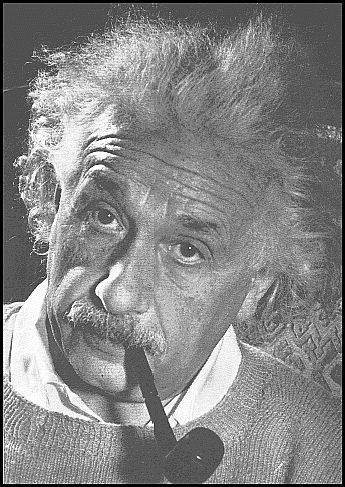
Although Einstein's relativity has taken the world by storm, there have been - for a decade or so - an increasing number of voices that pointed out all is not well in the relative world of physics.
Italian professor of mathematics Umberto Bartocci has collected and made available some of those criticisms on his site and in his publication "Episteme". Gene Mallove, founder of "Infinite Energy" magazine has produced a whole issue on Einstein and the myth of relativity before his tragic death by assassination. Here is Mallove's editorial "The Einstein Myths— Of Space, Time, and Aether". A discussion of Einstein and the implications of his theories can also be found on my other site (Health Supreme) under the title "New Physics: Debating Einstein, Matter, Time and Space".
Jim Hodges from Australia has sent me another contribution to the discussion. He examines the responsibilities of historians and philosophers of science in what appears to be a major re-direct of our scientific endeavors into a blind alley that seems to be leading nowhere in terms of a real understanding of the universe.
Let me add here that I realize that there are many Einstein critics, and even though I have heard from many of you before, I could not necessarily include you all in this short introduction to the Jim Hodges article. There is a facility at the end of this page to leave a comment, perhaps linking your own site or some place where your views can be accessed, if any of you desire to do so.
Continue reading "Relativity Fraud: The Complicity of Historians and Philosophers" »
Viktor Schauberger, the water wizard of early 20th Century Austria or, as I have called him, the father of implosion technology, is a fascinating figure in that his views on technology were just about diametrically opposed to the idea of steam and internal combustion based technical applications that characterize our industrial revolution heritage.
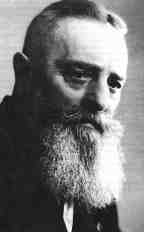
Viktor Schauberger (Image credit: www.evert.de)
Schauberger loved to work with water and he figured out how to use that medium to best effect, controlling temperature and mode of flow. His work involved wooden sluices to transport logs over great distances, devices to enhance the quality and health effects of water, a turbine harnessing the power of vortex flow in water and later on some more technical applications like a self-contained generator (never finished) and a proof-of-principle vortex based flying saucer device which got lost in the competition between the east-west super powers that emerged after World War II.
Two of my early articles analyze applications of that different technology as envisioned by Schauberger, on the example of a turbine harnessing vortex-type flow in water.
Esa Ruoho of the Modern Energy Research Library MerLib.org asked the other day, if I would mind answering a few questions on my views regarding Schauberger. I said no problem, and here is what I got myself into...
Continue reading "Schauberger Q and A - Making the Data Available" »
Money - we all talk about it, we use it every day, but hardly anyone asks where it comes from and even fewer know that it has an inherent cost that is mind boggling when you really start looking into it. When we don't have enough of it, we curse the circumstances of life, but hardly at all do we question why it is money always seems to be scarse.
That inherent cost of money is the stuff that ruins whole economies. But we accept the situation as it is, because economists tell us we just need to work harder...
G. Edward Griffin, in his book The Creature from Jekyll Island lets us look behind the scenes at who makes money and at what price. For those interested, here is an interview with the author.
Griffin named the mechanism on money creation after a cartoon character:

In the 1940s, there was a comic strip character called Mandrake the Magician. His specialty was creating things out of nothing and, when appropriate, to make them disappear back into that same void. It is fitting, therefore, that the process to be described in this section should be named in his honor.
Continue reading "Banks and Money - The Mandrake Mechanism" »
Many attempts have been made to harness energy from (permanent) magnets and in particular to get more energy out than is put in. Rotating devices such as Minato's magnetic fans and the Perendev magnetic motor as well as Mark Goldes' Magnetic Power Inc project are all in progress, but none has made the breakthrough yet.
Enters a simple idea called Parallel Path which seems to open a new avenue in the quest for magnet-powered over unity by manipulating the magnetic field itself.
It's one of those "two step ahead" technologies that entice commenters to automatically call the inventor a crackpot. What's meant by "two steps ahead"? Here we go:
You've heard the saying, "He who is one step ahead is a genius; he who is two steps ahead is a crack pot." That saying applies to the world of ideas. In the marketplace, it can be rephrased as follows: "He who is one step ahead is very rich; he who is two steps ahead is very dead -- or at least very persecuted." If you have a "two steps ahead" technology that is nearly ready for introduction into the market, you might consider purposely ratcheting it back a notch or two so that is resembles a "one step ahead" technology. Then, once you have your foot in the door, and your reputation established firmly, the "two steps ahead" will only be one step ahead. Probably the only way a two-steps-ahead technology could be introduced would be through open source, where a simple set of plans for an easy-to-build device are published openly for the world, impossible to stop by the powers that be.
The quote above is from Sterling Allan, who also introduces a recent article analyzing the new technology and discusses why slashdot won't touch the over unity topic:
Continue reading "Parallel Path - Over Unity From Magnets" »
Having read this article of Justin Raimondo yesterday, I caught a glimpse of a vision of destruction. Something that might await us just around the bend, like starting in less than two-weeks' time, when Iran is scheduled to open their new oil bourse where black gold will be traded in Euro, not in Dollars.
If you consider the dangers of man made pandemics, such as AIDS and the successor to last year's SARS, the Bird Flu, the scourge of depleted uranium or even just of the normal application of pharmaceutical medicine, which has become one of the major causes of death, it does not take a vivid imagination to see destruction awaiting a significant part of the planet's population...
... unless, of course, we should manage to wake up in time and take back control from those who would lead us to the brink of extinction to forward their policy objective of a marked reduction in population numbers.
Think about it.
Continue reading "War, Epidemics, Depopulation - Rough Times Ahead" »
Mike Emery says that spirit (God) is 2D and matter is 3D. He writes in ALL CAPS mode, but he says it's not because he is shouting, merely a more easy way for him to write. He sent one of his tantalizing questions on the nature of things, and I could not keep myself from joining the speculative musings about the nature of matter and time.
For what it may be worth, here is his question and my answer.
Continue reading "Musings on Matter and Time" »

An unusual rain fell in the Southern State of Kerala in India, a few years ago. The water that remained in catchments and vessels was not clear but red, sometimes yellow. Samples were collected and examined microscopically. Godfrey Louis and Santosh Kumar report in a paper to be published in Astrophysics and Space Science that the red particles suspended in the rain water seem to be of biological origin, having a fine cell structure. However they did not find any trace of DNA, thought to be one of the indispensable basic building blocks for living organisms.
The authors believe that what was found in Kerala is an example of Panspermia or Exogenesis. Panspermia is a theory that suggests biological life forms did not necessarily originate on earth, growing out of a "primordial soup" but are present throughout the universe and some of them are constantly "seeding" young planets with the ingredients needed for more advanced life forms to develop.
Continue reading "Panspermia - Are Red Rain Spores Life From Outer Space?" »

In today's globalized economy, manufacturing and other labor-intensive jobs are increasingly out-sourced, moved to developing countries, where people come cheap and social safety-nets do not exist. This leaves workers in the industrialized countries out of a job and puts them before the choice of accepting a lower wage or not to work at all.
Henry C.K. Liu believes that the reason for this is a fundamental imbalance between the bargaining position of capital as personified by multinational corporations and that of labor personified by all of us collectively, regardless of where we live. Labor, says Liu, does not have sufficient bargaining power, because the principles of free trade allow production to move to places where "the price is right", while restrictive immigration laws do not allow people to move where the best job offers are.
The result is decreasing compensation for labor and increasing profits for the large conglomerates world wide. While this may seem great for capital, it also leads to economic contraction, simply because hardly anyone has enough money to buy what is being produced. OLEC, a cartel of "Labor exporting" countries on the model of the petroleum exporting countries' OPEC, could re-establish the balance between labor and capital, says Liu.
Continue reading "OLEC: Global Cartel For Labor" »
|
|